


Every day, the world produces carbon dioxide that is released into the earth’s atmosphere and which will still be there in one hundred years.
This increased content of Carbon Dioxide increases the warmth of our planet and is the main cause of the so-called “Global Warming Effect”. One answer to global warming is to replace and retrofit current technologies with alternative energy that has comparable or better performance but do not emit carbon dioxide.
The Many Types of Renewable Energy
- Solar Energy
- Wind Energy
- Biomass Energy
- Geothermal Energy
- Hydroelectric Energy
- Hydrogen Energy and Fuel Cells
- Other Forms of Renewable Energy
When renowned astrophysicist Nikolai Kardashev first set out to measure a civilization’s level of technological advancement in 1964, he settled on energy consumption as the best metric for gaging progress on a cosmic scale.
In many ways, energy is the currency of our Universe, from single-celled organisms swimming in primordial pools to colonies of Meerkats on the African savannah, to sprawling metropolises like New York, Sydney, or Beijing.
At the dawn of the first millennium AD, the global population was a mere 150-200 million people, reaching 300 million by the year 1000 AD. By the dawn of the Industrial Revolution (mid-1700s), fossil fuels had fueled the rapid advancement and expansion of human civilization, reaching a population of 1 billion by 1800.
So where does that leave us today?
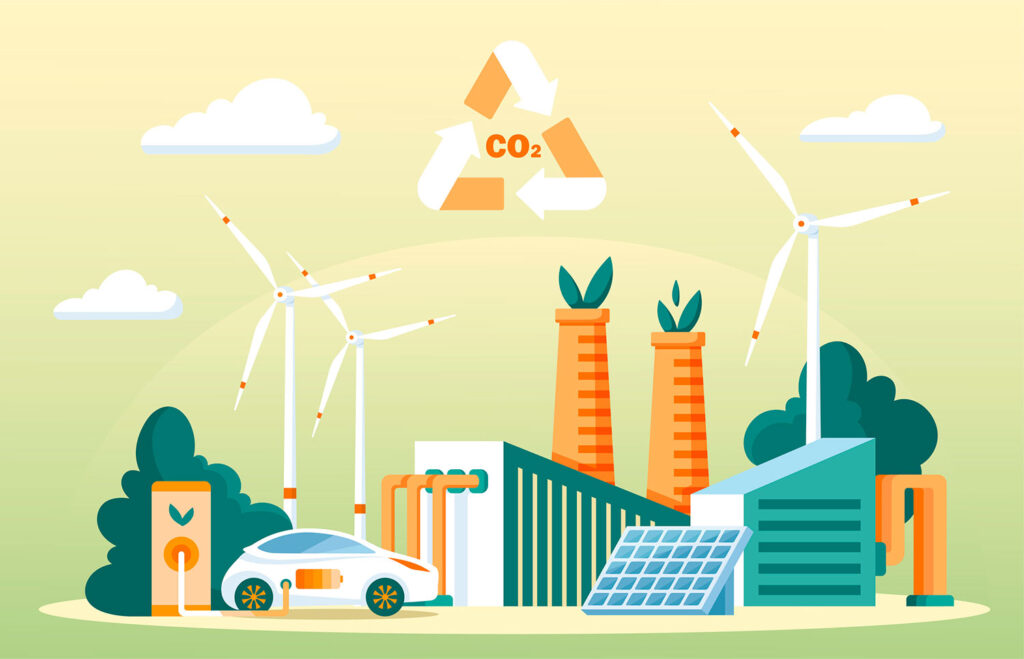
Contemporary society currently rests at 0.73 on the Kardashev scale. While we’ve got a shot at Type 1, the adverse effects of burning fossil fuels have left us in dire need of an alternative.
Enter, alternative energy - any energy source that provides an alternative to the status quo. Renewable energy sources don’t produce carbon dioxide emissions and other greenhouse gasses that contribute to anthropogenic climate change. Sources of energy include solar, wind, biomass, hydroelectric power, geothermal, and other carbon-neutral energy sources that will help humanity transition to a sustainable future.
Alternative Energy
By 2050, one-third of the world's energy will need to come from solar, wind, and other renewable resources. This is according to British Petroleum and Royal Dutch Shell, two of the world's largest oil companies. Climate change, population growth, and fossil fuel depletion mean that renewables will need to play a bigger role in the future than they do today.
Alternative energy refers to energy sources that have no undesired consequences such as fossil fuels or nuclear energy. Alternative energy sources are renewable and are thought to be "free" energy sources. They all have lower carbon emissions, compared to conventional energy sources. These include Biomass Energy, Wind Energy, Solar Energy, Geothermal Energy, Hydroelectric Energy sources.
Combined with the use of recycling, the use of clean alternative energies such as the home use of solar power systems will help ensure man's survival into the 21st century and beyond.
Solar Power
This form of energy relies on the power from the core of the Sun. Solar energy can be collected and converted in a few different ways. The range is from solar water heating with solar collectors or attic cooling with solar attic fans for domestic use to the complex technologies of direct conversion of sunlight to electrical energy using mirrors and boilers or photovoltaic cells. Unfortunately, these are currently insufficient to fully power our modern society.
What better way is there to reach Type I status, than to get your energy straight from the source—solar power involves harnessing the power of our sun. From photovoltaic (PV) cells that capture photons and convert them into electricity, to solar thermal energy (STE) that makes use of the sun’s heat, solar is one of the most promising alternative energy sources on the market today.
From an environmental perspective, solar power is the best thing going. A 1.5 kilowatt PV system will keep more than 110,000 pounds of carbon dioxide, the chief greenhouse gas, out of the atmosphere over the next 25 years. The same solar system will also prevent the need to burn 60,000 pounds of coal. With solar, there's no acid rain, no urban smog, no pollution of any kind.
Mankind has been crazy to have not bothered to harness the sun's energy until now. Think about this. Go outside on a sunny day. The light falling on your face left the Sun just 8 minutes ago. In that 8 minutes, it traveled 93 million miles.
Those photons are hauling and when they strike your PV module you can convert that motion to electricity. As technology, photovoltaics are not as glitzy as that new sport utility vehicle the television tells us to crave. But in many ways, PV is a much more elegant and sophisticated technology.
Whether it be for your business or your home, why not invest in solar panels? Today's solar panels are bombproof and often come with a 25 year warranty or more. Your solar panels may outlive you. They are also modular – you can start with a small system and expand it over time. Solar panels are light (weighing about 20 pounds), so if you move you can take the system with you.
Solar Energy Systems
Photovoltaic modules (PVs), or solar panels, are electrical semiconductors, like transistors. They are made of layers of silicon. The N layer has an excess of electrons, the P layer has a deficit. When the layers are struck by photons from light, extra electrons from the N layer are knocked loose and travel to the P layer. A circuit connecting the two allows you to divert the flow of electrons, the electric current, to do useful work, like charging a battery or powering a motor.
Most PV modules are actually groups of individual cells, connected to provide a voltage of about 17 volts. This allows them to charge battery systems based on 12 volts. Since the voltage of the PV module is slightly higher than the battery voltage, electricity will flow from the PV into the battery, like water flowing downhill.
Batteries can be connected in series for multiples of 12 volts (24,36,48 etc) and so can PVs. However, PVs don’t have to be used with battery systems. The simplest systems of all are called array direct. For example, a small solar panel on the roof can be directly connected to a DC fan for a very efficient attic vent system. When the sun shines, the fan spins. Battery systems provide a means of storing the harvested energy for later use.
PVs put out the most power when it is clear and cold. When it’s really hot, they may put out slightly more current but the voltage is lower. Some of the newer modules like the United Solar triple junctions are very heat tolerant. PVs produce power in cloudy and overcast weather, just not as much as in bright sunshine.
Why do solar panels cost so much? Simply put, they don’t when you look at the big picture. Considering that you never have to put gas in them and they just keep making power for years (most have a 10 to 20 or more year warranty) they are an unusually good buy. It’s just that the cost is all upfront.
Can I run my whole house on solar power?
Yes, you can. Thousands of people all over the world are doing it. If you use air conditioning it will cost about as much as a new car. The first step is to make the home as energy efficient as possible, then the renewable energy system will be smaller and cheaper.
Many mass-produced appliances simply aren’t designed to be energy efficient, and will need to be replaced. For example, a typical refrigerator will require power from 18 to 22 fifty watt PVs, whereas a super efficient refrigerator can be powered by only 3 of the same modules. Yes, there is that big of a difference. A small starter system is a good idea and provides for training and familiarity with how a renewable energy system functions.
A simple home backup power system that can provide power for TV, computer, fans, lights, and small appliances can be had for about $1500. This system would include 1 or 2 batteries for storage, a charge controller, 1 or solar panels, mounting hardware, electrical fuses, circuit breakers and disconnects, and an inverter in the 700 to 1500 watt class to provide AC power.
Wind Power
The movement of the atmosphere is driven by differences in temperature at the Earth's surface due to varying temperatures of the Earth's surface when lit by sunlight. Wind energy can be used to pump water or generate electricity but requires extensive aerial coverage to produce significant amounts of energy.
For thousands of years, humans have harnessed the wind to push sails, mill grain, and pump water. Today, windmills use turbines to convert rotational energy into electricity that can reliably flow into a grid. On a larger scale, wind farms are projected to provide as much as 20% of global electricity production by 2030.
Societies have taken advantage of wind power for thousands of years. The first known use was in 5000 BC when people used sails to navigate the Nile River. Persians had already been using windmills for 400 years by 900 AD to pump water and grind grain.
Windmills may have even been developed in China before 1 AD, but the earliest written documentation comes from 1219. Cretans were using "literally hundreds of sail-rotor windmills [to] pump water for crops and livestock."
Today, people are realizing that wind power "is one of the most promising new energy sources" that can serve as an alternative to fossil fuel-generated electricity. The cost of wind has dropped by 15% with each doubling of installed capacity worldwide, and capacity has doubled three times during the 1990s and 2000s.
As of 1999, global wind energy capacity topped 10,000 megawatts, which is approximately 16 billion kilowatt-hours of electricity. That's enough to serve over 5 cities the size of Miami, according to the American Wind Energy Association. Five Miamis may not seem significant, but if we make the predicted strides in the near future, wind power could be one of our main sources of electricity.
Though wind energy is now more affordable, more available, and pollution-free, it does have some drawbacks. Wind power suffers from the same lack of energy density as direct solar radiation. The fact that it is a "very diffuse source" means that "large numbers of wind generators (and thus large land areas) are required to produce useful amounts of heat or electricity.
"But wind turbines cannot be erected everywhere simply because many places are not windy enough for suitable power generation. When an appropriate place is found, building and maintaining a wind farm can be costly. It "is a highly capital-intensive technology."
If the interest rates charged for manufacturing equipment and constructing a plant are high, then a consumer will have to pay more for that energy.
"One study found that if wind plants were financed on the same terms as gas plants, their cost would drop by nearly 40%." Fortunately, the more facilities built, the cheaper wind energy is.
But there is increasing demand to find many other alternative sources of power and make them viable, such as geothermal, wave energy, and biomass.
Wind Generators
Wind Generators come in a variety of sizes. The smaller ones are easily installed by the do-it-yourselfer. The medium-sized wind generators (gensets) are probably best used on modern tilt-up towers that provide for safe lowering and raising. The largest gennys will probably require the use of a crane to place them on large, fixed towers. Small and medium gennys usually produce power that is stored in an RE system battery bank. Large generators usually are grid intertied, i.e., they pump power straight into the local utility grid.
If you think you have a good wind site, you probably do. You can use a wind speed measuring device to evaluate your site. Most wind generators are rated for power @ speed, for example, 1000 watts at 25 miles per hour. This means that at 12 mph wind speed the genny will produce quite a bit less than the full rated 1000 watts.
The various manufacturers usually provide a chart or ``power curve' showing power output at various wind speeds. Some models produce more useable power in the 10-15 mph range than others, so it pays to compare curves.
The other factor you need to know about in considering wind machines is turbulence. Straight, laminar flowing air is capable of imparting more of its energy to the generator than is rolling, turbulent air. Trees and other obstacles can produce a cone-shaped region of turbulent air that can extend downwind 500 feet or more.
A good rule of thumb is to pick a tower that will place the bird at least 20 feet higher than trees or obstacles within 500 feet. As an old saying goes, "The higher the tower, the more the power."
Wind machines can work together with solar panels to store power in your battery bank. Sometimes when the sun isn't shining, the wind is blowing, and vice-versa. Wind generators are graceful, beautiful birds that are a joy to look at as well as provide power.
Biomass Energy
Biomass and biodiesel are among the most widely used renewable energy sources. In stark contrast to fossil fuels which are produced by geological processes that can take millions of years, biomass typically refers to biofuels that are obtained through biological processes such as agriculture and anaerobic digestion.
Biomass is the term for energy from plants. Energy in this form is very commonly used throughout the world. Unfortunately the most popular is the burning of trees for cooking and warmth. This process releases copious amounts of carbon dioxide gasses into the atmosphere and is a major contributor to unhealthy air in many areas.
Some of the more modern forms of biomass energy are methane generation and production of alcohol for automobile fuel and fueling electric power plants.
Fuels like bioethanol from corn or biodiesel from transesterification of plant oils burn cleaner than conventional fossil fuels and can help countries stay within their carbon budgets.
Geothermal Energy
Roughly 1.4 x 10²¹ joules of heat energy flow to the Earth's surface every year. Regions with high levels of geothermal activity like Iceland and Indonesia can tap into this geothermal energy available in magma conduits and hot springs to spin turbines that generate electricity or provide natural heating to homes.
Energy left over from the original accretion of the planet and augmented by heat from radioactive decay seeps out slowly everywhere, every day. In certain areas, the geothermal gradient (increase in temperature with depth) is high enough to exploit to generate electricity. This possibility is limited to a few locations on Earth and many technical problems exist that limit its utility.
Another form of geothermal energy is Earth energy, a result of the heat storage on the Earth's surface. Soil everywhere tends to stay at a relatively constant temperature and can be used with heat pumps to heat a building in winter and cool a building in summer. This form of energy can lessen the need for other power to maintain comfortable temperatures in buildings, but cannot be used to produce electricity.
Hydroelectric Energy
This form uses the gravitational potential of elevated water that was lifted from the oceans by sunlight. It is not strictly speaking renewable since all reservoirs eventually fill up and require very expensive excavation to become useful again. At this time, most of the available locations for hydroelectric dams are already used in the developed world.
Hydro Generators
Hydro Generators can be divided into basically two types, low head, and high head. 1 gallon of water falling 100 feet (high head) contains as much energy as 100 gallons falling 1 foot (low head).
In a typical high head system, a pipe contains water from a source high above, a stream or lake. The pipe may be thousands of feet long and be a drop or head of several hundred feet. The water at the bottom end of the pipe is under pressure from the weight of all the water above it. When released through a nozzle, a jet of water sprays out and hits a special wheel with cups, called a Pelton wheel, causing it to spin. The spinning wheel turns a generator which produces power.
These systems are usually custom designed, with the shape and number of nozzles matched to the pressure and flow volume of the water.
In a typical low head system propellers or turbine blades are turned by the water in a stream or lake overflow. A Venturi-shaped structure can be built to funnel the water passed the generator at a faster rate. This type of hydro generator can also be attached to sailboats.
Hydrogen and Fuel Cells
These are also not strictly renewable energy resources but are very abundant in availability and are very low in pollution when utilized. Hydrogen can be burned as a fuel, typically in a vehicle, with only water as the combustion product.
This clean burning fuel can mean a significant reduction of pollution in cities. Or the hydrogen can be used in fuel cells, which are similar to batteries, to power an electric motor. In either case, significant production of hydrogen requires abundant power.
Due to the need for energy to produce the initial hydrogen gas, the result is the relocation of pollution from the cities to the power plants. There are several promising methods to produce hydrogen, such as solar power, that may alter this picture drastically.
Other Forms of Renewable Energy
Energy from tides, the oceans, and hot hydrogen fusion are other forms that can be used to generate electricity. Each of these is discussed in some detail with the final result being that each suffers from one or another significant drawback and cannot be relied upon at this time to solve the upcoming energy crunch.
Other forms of conventional renewable energy include tidal, ocean thermal, wave, and hot fusion. Tidal energy utilizes the gravitational energy of the attraction of the Sun, Earth, and Moon. Wave power converts the energy released in crashing waves, which originated in the wind and is driven by sunlight.
Ocean thermal energy exploits the greatest collector of solar energy on Earth, the sea. Hot fusion is not strictly renewable since it consumes hydrogen, but hydrogen is so abundant that it can be considered limitless for human purposes. Each of these energy forms has its own advantages and disadvantages, but none of them is the answer to the looming energy crunch. We will address each of them in turn.
Tidal Energy
The rise and fall of the tides are steady and predictable, making tidal power a viable alternative source of energy for regions where high tidal ranges are available. The Rance Tidal Power Station in France is the world’s first large scale tidal power plant. It uses turbines to generate electricity, much like hydroelectric power does for a dam.
More recently, CETO, the grid-connected wave power station off the coast of Western Australia used a series of buoys and seabed pumps to generate electricity.
Tidal Energy works on the same fundamental principle as the water wheel. In the case of tidal energy, however, the difference in water elevation is caused by the difference between high and low tides.
The technology involves building a dam, or barrage, across an estuary to block the incoming tide, the outgoing tide, or both. When the water level on one side of the dam is higher than the level on the other side due to a tidal change, the pressure of the higher water builds. The water is channeled through a turbine in the dam in order to get to the other side, which produces electricity by turning an electric generator.
Tidal energy is being harnessed in several countries around the world, from facilities in Russia to France with 400 kW to 240 MW capacities. Some proposed sites, however, exhibit extraordinary potential. Britain 's Severn Estuary and Canada 's Bay of Fundy have potential capacities of as much as 8,000 and 30,000 MW, respectively.
The Severn Estuary averages an 8.8-meter (26-foot) tidal range and the Bay of Fundy averages a 10.8-meter (32-foot) tidal range, ideal for substantial electricity generation. But the rarity of these exceptionally high tides is the main limitation of this energy source.
Considering that "a tidal range of at least 7 meters is required for economical operation and for a sufficient head of water for the turbines," few places in the world can make a facility's establishment worthwhile. Since tidal power's "estimated capacity is 50 times smaller than the world's hydroelectric power capacity," it cannot compare to other renewables.
Another constraint to the tidal system is the sheer amount of time that passes in which little electricity can be generated between the rising and falling tides. During these times, the turbines may be used to pump extra water into the basin to prepare for periods of high electricity demand, but not much else can be done in the interim to generate more electricity.
By its very nature, a tidal-based energy facility can only generate a maximum of ten hours of electricity per 24-hour day. That means it cannot be expected to supply power at a steady rate or during peak times.
Although the operation and maintenance costs of a tidal power plant are low, the cost of the initial construction of the facility is prohibitive, so the overall cost of the electricity generated would be quite high. For example, it is estimated that the Severn tidal project with a proposed capacity of 8,640 MW will cost $1,600 per kW, or over $13.8 billion. This cost exceeds that of coal and oil facilities by a considerable amount.
In contrast to the combustion of fossil fuels, the use of tidal energy does not contribute to global warming. But tidal energy facilities do not come without an environmental price tag. The alteration of the natural cycle of the tides may affect shoreline as well as aquatic ecosystems. Pollution that enters a river upstream from the plant may be trapped in the basin, while the natural erosion and sedimentation pattern of the estuary may be altered.
Local tides could decrease by more than a foot in some areas, and the "enhanced mixing of water" could stimulate the growth of organisms, better known for their red tide effect, which paralyzes shellfish. So little is known about the potential harm of a tidal energy facility that some people believe "one of the only methods of increasing our knowledge about how tidal barrages affect ecosystems may be the study of the effects after such facilities have been built." With such uncertainty, tidal power appears to be an unproven alternative energy candidate.
Assuming that the high costs and the environmental issues were circumvented, the problem of distributing the energy generated by tidal facilities would still exist. Since the collection sites are limited and fixed at unalterable locations, the power they generate must still be distributed throughout the inland areas serviced by the plant via a transmission grid system.
The distribution of energy across vast inland spaces presents formidable problems. This would make it extremely difficult to replace the existing energy infrastructure, and our entire electricity needs could never be met by tidal power alone.
"Worldwide, approximately 3000 gigawatts (1 gigawatt = 1 GW = 1 billion watts) of energy is continuously available from the action of tides. Due to the constraints outlined above, it has been estimated that only 2% or 60 GW can potentially be recovered for electricity generation." Despite tidal power's inability to replace conventional energy sources, it will not be dismissed in the near future. Britain, India, and North Korea have planned to supplement their grid with this renewable energy source.
Meanwhile, "a university study in January [1998] said New Zealand could become the first country in the world to run solely on fossil fuel-free power if it exploited the tides on its long coastlines as well as its plentiful wind and sunshine. But while the wind may not constantly blow and the sun may not shine 24 hours a day, the advantage of the tides is that they never cease."
Wave Energy
Wave Energy, like tidal power, will always be available, but there are current constraints that limit its contribution to the electrical grid. Areas with the strongest winds will produce the highest concentrations of wave power – a low-frequency energy that can be converted to a 60-Hertz frequency.
The best areas are on the eastern sides of the oceans (western side of the continents) between the 40 and 60 latitudes in both the northern and southern hemispheres. The waters off California and the UK are regarded as the best potential sites." California's coastal waters are sufficient to produce between seven and 17 MW per mile of coastline."
There are several drawbacks of wave energy. While the "wave power at deep ocean sites is three to eight times the wave power at adjacent coastal sites," constructing and mooring the site and transmitting the electricity to shore would be prohibitively costly. Especially considering that "a wave power unit will probably not have much more than three times the output of a single wind turbine."
Once in place, the device could be a dangerous obstacle to navigational craft that cannot see or detect it on radar, while fishermen may have trouble with the underwater mooring lines. Conversely, an onshore wave energy system or offshore platform would have a significant visual impact. Scenic views would be replaced by industrial activity.
Wave energy has received little attention in comparison to other renewable sources of energy. Though 12 broad types of wave energy systems have been developed combinations of fixed or moveable, floating or submerged, onshore or offshore scientists have not fully investigated this technology.
"Many research and development goals remain to be accomplished, including cost reduction, efficiency and reliability improvements, identification of suitable sites in California, interconnection with the utility grid, better understanding of the impacts of the technology on marine life and the shoreline. Also essential is a demonstration of the ability of the equipment to survive the salinity and pressure environments of the ocean as well as weather effects over the life of the facility."
Even a successfully built and operated wave power facility could not provide extra power for peak demand, nor would it be a reliable source of energy.
There are a handful of wave energy demonstration plants operating worldwide, but none produces a significant amount of electricity. Projects have been discussed for various sites in California San Francisco, Half Moon Bay, Fort Bragg, and Avila Beach but no firm plans have been made. While government agencies in Europe and Scandinavia are sponsoring research and development, "wave energy conversion is not commercially available in the United States.
The technology is in the early stages of development and is not expected to be available within the near future due to limited research and lack of federal funding."
Ocean Thermal Energy Conversion (OTEC) seems to be a promising source of renewable, non-polluting energy for the future.
The oceans comprise over two-thirds of the earth's surface, meaning they collect and store an enormous amount of solar energy. The raw numbers show that if even 0.1% of this stored energy could be tapped, the output would be 20 times the current daily energy demands of the United States.
Ocean thermal energy conversion exploits the temperature gradient between the varying depths of the ocean, requiring at least a 36F difference from top to bottom, as is found in tropical regions.
This difference in temperature is the "heat engine" for a thermodynamic cycle. There are three types of OTEC designs: open cycle, closed cycle, and hybrid cycle. In an open cycle, seawater is the working fluid. Warm seawater is evaporated in a partial vacuum, expanding through a turbine connected to an electrical generator.
The steam then passes through a condenser that uses cold seawater from the depths of the ocean, and the result is desalinated water that can be used for other purposes. New seawater is used in the next cycle. In a closed cycle, a low boiling point liquid such as ammonia or refrigerant is used as the working fluid, vaporized by warm seawater. After expanding through a turbine connected to an electrical generator, cold seawater is used to condense the vapor back into a liquid to start the process again.
A hybrid cycle combines the two processes, in which flash-evaporated seawater creates steam, which in turn vaporizes a working fluid in a closed cycle. The vapor from the working fluid powers the turbine while the steam is condensed for desalinated water, as in an open system. The hybrid system continues to process seawater and produce electricity.
OTEC taps energy in a consistent fashion, producing what "is probably the most environmentally friendly energy available on the planet today." Unfortunately, the realization of this promising potential is largely experimental for the time being. In fact, the only ocean thermal energy conversion plant in the U.S. was an experimental facility – the Natural Energy Laboratory of Hawaii (NELHA), which was closed at the end of a successful test in 1998.
The technology is still far from being developed to an extent to make this type of innovation viable as a widespread alternative energy source. The facility in Hawaii, for instance, produced the highest amount of electricity to date with a 210 kW open-cycle OTEC experimental facility that operated from 1992 to 1998.
When considering the capacity of conventional combustion turbines, ranging from a typical output of 25 MW to a maximum of 220 MW, this technology is not even in the running.
It is most applicable on small islands that depend on imported fuels. This system would render an island more self-sufficient while improving the sanitation and nutrition standards, with an abundance of desalinated water that could be used to grow aquaculture products.
It will be some time before OTEC technology is in a position to partially phase out the use of fossil fuels. The location limitations stall any worldwide progress, and the ability of the technology to produce the quantity of energy needed to supply the world energy demands is still largely theoretical.
Nuclear Fusion
Nuclear Fusion has been called "the Holy Grail of the energy field." It is the diametrically opposite process of nuclear fission, in which an atom of the heavy isotope Uranium-238 is split in a collision with an accelerated neutron, releasing some of the energy from inside the atom.
Fusion involves combining light atoms, which release an enormous amount of energy. The waste product of this reaction is helium and it is precisely this process that fires most stars, in particular our sun. "Fusion is attractive as an energy source because of the virtually inexhaustible supply of fuel, the promise of minimal adverse environmental impact, and its inherent safety."
The atoms fused together in a reaction are not ordinary hydrogen atoms that contain only one proton in the nucleus. They are the heavy isotopes of deuterium or tritium that contain one or two neutrons along with the protons in their nucleus. These isotopes are somewhat rare in nature "about one part [deuterium] in 6000 is found in ordinary water" but the technology exists to isolate them in great abundance.
The fundamental problem with traditional nuclear fusion is that the fuel, the heavy hydrogen, must be raised to over one hundred million degrees. At such a tremendous temperature, the electrons are stripped away from the heavy hydrogen atoms leaving a fully ionized state called "plasma." This plasma must then be held together in order to produce useful amounts of electricity.
There are no known construction materials that can withstand such temperatures, so the plasma must be contained by magnetic or inertial confinement. "Magnetic confinement utilizes strong magnetic fields, typically 100,000 times the earth's magnetic field, arranged in a configuration to prevent the charged particles from leaking out (essentially a magnetic bottle). Inertial confinement uses powerful lasers or high energy particle beams to compress the fusion fuel."
Another fundamental problem with hot fusion revolves around "whether a fusion system producing sufficient net energy gain to be attractive as a commercial power source can be sustained and controlled." While fusion power production has increased from less than one watt to over 10 million watts over the years, we still have yet to witness a net energy gain.
Even if this were to be achieved in the near future, the metallurgical requirements that must be met by the surrounding structural materials are extremely demanding and cost prohibitive. Accomplishing a net energy gain in hot fusion will involve the construction of a $1 billion device for experimenting with burning plasma.
Add to this the estimate of $300 million per year that the fusion community in the US will require for "significant enhancements of the program" up from the current $230 million. The US is not alone in its fusion expenditure. Concerned about reliance on imported energy, Japan and Europe have respectfully allotted 1.5 and 3 times the budget that the US currently spends for hot fusion.
The incredible complexity and cost of this process is the precise reason why the announcement of a "cold fusion breakthrough" at the University of Utah a few years ago met with such enthusiasm. If the process could be brought about at room temperatures, the complexity that now prevents the generation of power based on nuclear fusion would disappear.
While billions of dollars and decades of research have been devoted to hot fusion, we are far from mastering this type of energy generation." Optimistic projections do not suggest that fusion energy will contribute significantly to energy supply until well into the next century." Nevertheless, the US Department of Energy's August 1999 Final Report of the Task Force on Fusion Energy concluded, "that we should pursue fusion energy aggressively."
Appliances for Renewable Energy Systems
Energy efficient appliances often cost more than their mass-produced counterparts but can result in dramatic savings in required RE system components. The less power consumed, the less needs to be produced.
A super efficient refrigerator might cost twice as much as a conventional unit, but be 10 times or more efficient.
Common incandescent light bulbs use over 90 percent of the energy they consume making heat! Compact fluorescent lamps cost more initially, but over time are the most inexpensive. The new LED lamps are even more efficient.
A balanced study in RE technology should include at least as much investment in learning about energy efficiency as that spent on learning about RE power producing hardware.
Can A Country Achieve 100% Renewable Energy?
If you think 100% renewable energy will never happen, think again. Several countries have adopted ambitious plans to obtain their power from renewable energy. These countries are not only accelerating RE installations but are also integrating RE into their existing infrastructure to reach a 100% RE mix.
What are renewable energy sources? Solar power can be used directly for heating and producing electricity or indirectly via biomass, wind, ocean thermal, and hydroelectric power. Energy from the gravitational field can be harnessed by tidal power, and the internal heat of the Earth can be tapped geothermally.
These tools and more can help make the transition from non-renewable to renewable and environmentally friendly energy. However, none of these is sufficiently developed or abundant enough to substitute for fossil fuel use.
Every one of these power sources (with the exception of hydroelectric) has low environmental costs, and combined have the potential to be important in avoiding a monumental crisis when the fossil fuel crunch hits. These energy sources are often non-centralized, leading to greater consumer control and involvement.
However, currently, each of these energy forms is significantly more expensive than fossil fuels, which will lead to economic dislocations and hardship if they become the only power source for the future.
Renewable Energy
There are many forms of renewable energy. Most of these renewable energies depend in one way or another on sunlight.
Wind and hydroelectric power are the direct results of differential heating of the Earth's surface which leads to air moving about (wind) and precipitation forming as the air is lifted. Solar energy is the direct conversion of sunlight using panels or collectors.
Biomass energy is stored in sunlight contained in plants.
Other renewable energies that do not depend on sunlight are geothermal energy, which is a result of radioactive decay in the crust combined with the original heat of accreting the Earth, and tidal energy, which is a conversion of gravitational energy.
Modern RE systems are dependable, safe, powerful, and user friendly. In a typical system, electric power in the form of DC electricity is produced by an RE source, i.e., an array of solar panels, a wind generator, or hydro generator. This power is stored in deep cycle batteries and is available as needed.
Charge controllers prevent damage to the batteries from overcharging, and many have built-in meters to monitor battery charge status, incoming and outgoing power, etc. Inverters turn the DC power from the batteries into the AC power commonly used in the home. Super energy efficient appliances keep the overall size of the RE system to a minimum.
All these components are described in more detail below, and come in a large variety of sizes and capabilities. The components can be combined in an infinite number of ways to create customized systems to support your electrical need or load. Kits provide pre-fabricated systems designed to do a specific job.